From Sketch to Production: How a Garment Is Actually Developed


Many new fashion founders believe that once a design is sketched, it can simply be sent to a factory for production. In reality, the process of developing a garment is much more detailed.
Without proper development, even a great design idea can turn into production delays, poor fit, or costly mistakes.
A professional development process ensures that every detail—from the sketch to the fabric selection—is carefully planned before production begins.
1. Concept Sketch and Design Clarity

The first step is transforming the design idea into a clear technical sketch.
In garment development, the sketch is not meant to be an artistic illustration. Instead, it should be a flat technical drawing that clearly shows the garment construction.
These sketches communicate important details such as:
seam placements
ruching or pleats
placket construction
sleeve structure
overall garment proportions
When the sketch clearly illustrates how the garment is built, pattern makers and sample makers can understand exactly how to construct the piece.
This step requires knowledge of garment construction, not just illustration skills. Someone creating these sketches must understand how garments are actually built so the factory can follow the design accurately.
2. Fabric Selection and Material Understanding

Fabric is one of the most important decisions in garment development. The material determines how the garment drapes, how it fits on the body, and how it performs during wear.
Choosing fabric requires understanding factors such as:
drape and structure
fabric weight and stiffness
stretch and recovery
how the material behaves after washing
Different fabrics create different silhouettes. A flowing dress, for example, requires very different fabric characteristics than a structured garment.
When the right fabric is selected early in development, it helps ensure the design functions as intended.
3. Technical Documentation
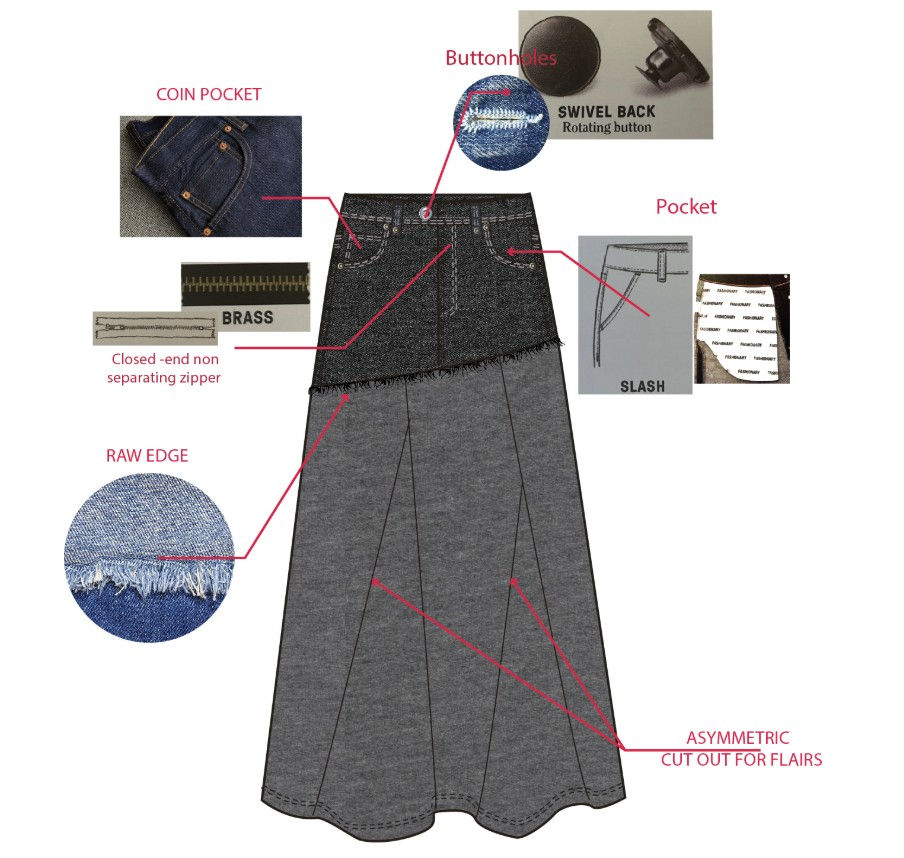
Once the design and materials are defined, the garment must be translated into technical documentation.
This includes:
precise garment measurements
construction details
materials and trims
sewing instructions
production notes
These details are usually organized in a technical package (tech pack), which serves as the blueprint for the factory.
Without clear technical instructions, factories are often forced to interpret the design themselves, which can lead to inconsistencies and production errors.
4. Sample Development

After the technical information is prepared, the factory creates the first prototype sample.
This sample allows the design team to evaluate:
garment fit
proportions and balance
construction quality
fabric performance
This stage is where the design begins to take physical form.
5. Fit Review and Adjustments

The first sample rarely comes out perfectly. Fit reviews are necessary to evaluate how the garment sits on the body.
Adjustments may include:
modifying measurements
adjusting pattern shapes
refining construction details
Several revisions may be required before the garment reaches its final approved version.


Comments